Simple Ways To Handle Small Tree Removal Safely
Small tree removal can look easy, but even a short tree can create problems near a home, driveway, fence, or garden. At SDV Professional Tree Service LLC, we help homeowners make safe choices before a tree becomes a larger concern.
Knowing what to check before cutting can protect your property. With simple planning and clear safety steps, you can decide when removal makes sense and when professional help is better.
Warning Signs That Show A Tree Needs Removal
A small tree may need attention when the trunk has deep cracks, soft wood, hollow areas, or visible decay. Fungi around the base can also point to hidden damage. These signs can weaken the tree during storms.
If you wonder when a small tree should be removed, look at its position as well as its health. Branches touching the roof, a strong lean, or damaged roots can increase risk. Our tree removal options explain how we handle unsafe trees.
Common Property Risks From Small Trees Near Homes
Homeowners often ask: Can small trees damage foundations? In some cases, roots can affect nearby soil, walkways, drains, or weak concrete areas. The level of risk depends on the tree type, distance from the home, and local soil conditions.
- Roots may lift thin sidewalks or patio areas.
- Branches may rub against roofs, siding, or gutters.
- Weak trees can fall during heavy wind or storms.
Early checks can prevent bigger problems. If a tree is close to a building, our team at SDV Professional Tree Service LLC can review the area and explain practical next steps.
Safety Checks To Make Before Starting Tree Removal
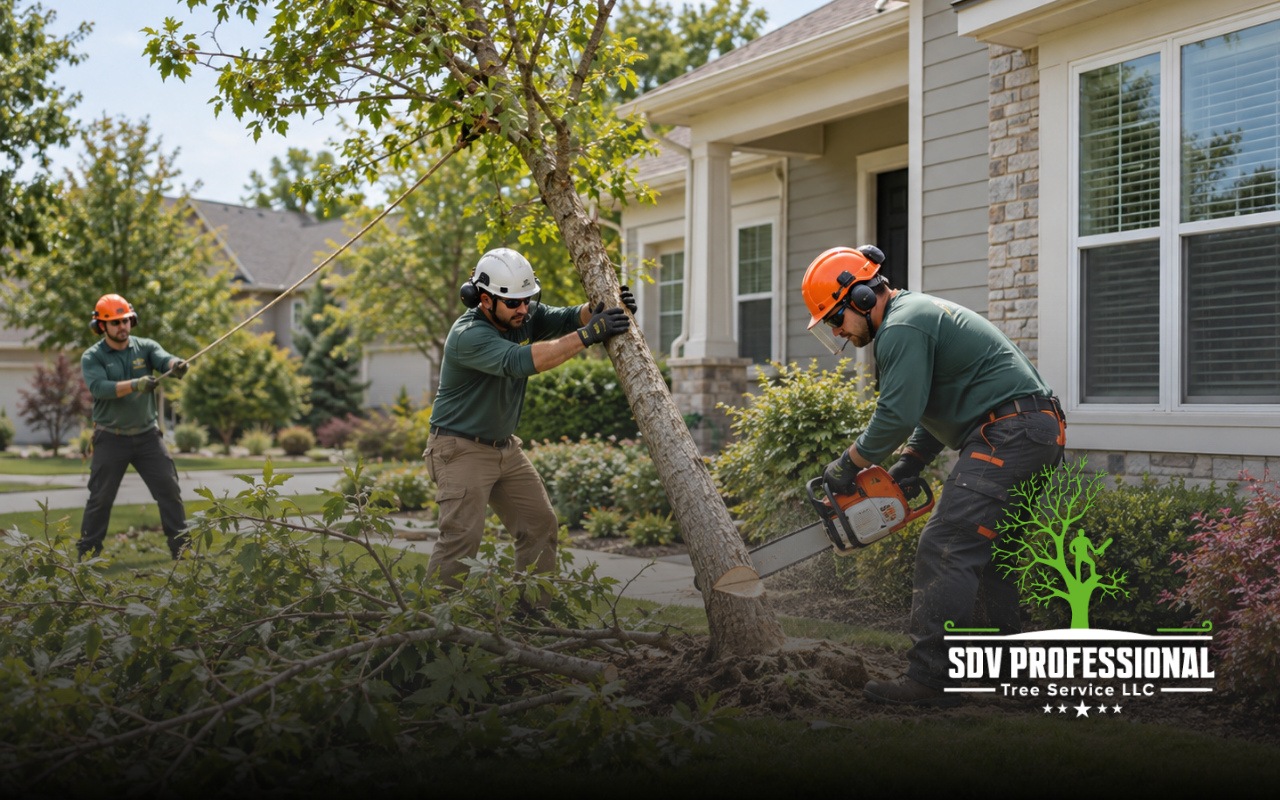
Before small tree removal, check everything around the tree. Look for power lines, fences, parked vehicles, sheds, and people nearby. Choose a clear path to move away if the trunk shifts.
Weather matters too. Avoid cutting during rain, high wind, or storms. Wet ground can reduce balance, while wind can change the direction of falling branches. For more guidance, read why professional tree removal may be safer.
Basic Tools That Support A Safer Removal Process
The right tools can make a small job easier, but they should match the tree’s size and condition. Worn tools or poor cutting methods can increase injury risk.
- Utilize pruning tools for small and easy-to-reach branches.
- Wear gloves, eye protection, and sturdy work shoes.
- Keep ropes or straps available when guidance is needed.
- Use a tarp or wheelbarrow for light debris.
If the tree is hard to reach or has heavy limbs, a trained crew may be a safer choice.
Local Rules And Permits Can Affect Tree Removal
Local rules may affect whether a tree can be removed, especially in protected areas or certain neighborhoods. Requirements can change by city, county, or property type, so checking local guidance before work begins is important.
Homeowners considering a small tree removal service in Alabama should also review permit rules in their area. Our Madison tree permit guide offers helpful local information. At SDV Professional Tree Service LLC, we also explain what may apply before work starts.
Professional Support Makes Difficult Tree Work More Manageable
Some trees are small but still difficult to remove. A lean toward a home, nearby utility lines, limited yard space, or hidden decay can make the work less predictable. In these situations, professional support can reduce avoidable risks.
- Crews can plan the direction of cuts carefully.
- Proper equipment helps control branches and trunk sections.
- Experience helps identify weak wood before cutting begins.
For homeowners seeking a small tree removal service in Alabama, our Huntsville tree removal information explains how we approach local projects. You can also review our tree services in Decatur.
Frequently Asked Questions
When should a small tree be removed?
Removal may be needed when the tree has serious decay, a strong lean, damaged roots, repeated branch failure, or unsafe contact with a building or utility area.
Can small trees damage foundations over time?
Roots can sometimes affect nearby soil, drains, pavement, or weak concrete. Risk depends on the tree type, distance, soil, and existing property conditions.
Is removing a small tree safe for homeowners?
Some simple jobs may appear manageable, but cutting can become unsafe when the tree is damaged, near structures, or difficult to control.
What happens to the stump after removal?
The stump can stay in place, be dug out, or be ground down. The best choice depends on your yard plans and the stump location.
When is the best season for tree cutting?
Timing depends on tree health, weather, and safety concerns. Our guide to the best time for tree cutting explains key factors.
Plan Your Next Tree Project With Clear Guidance
A safe result begins with careful planning. Small tree removal should consider tree health, nearby structures, weather, local rules, and the right equipment. These checks help protect your yard and property.
With SDV Professional Tree Service LLC, you can get clear guidance based on your property and tree condition. If you are unsure about the safest next step, contact us to discuss your project.