What to Know About Hollow Tree Trunk Safety in Alabama
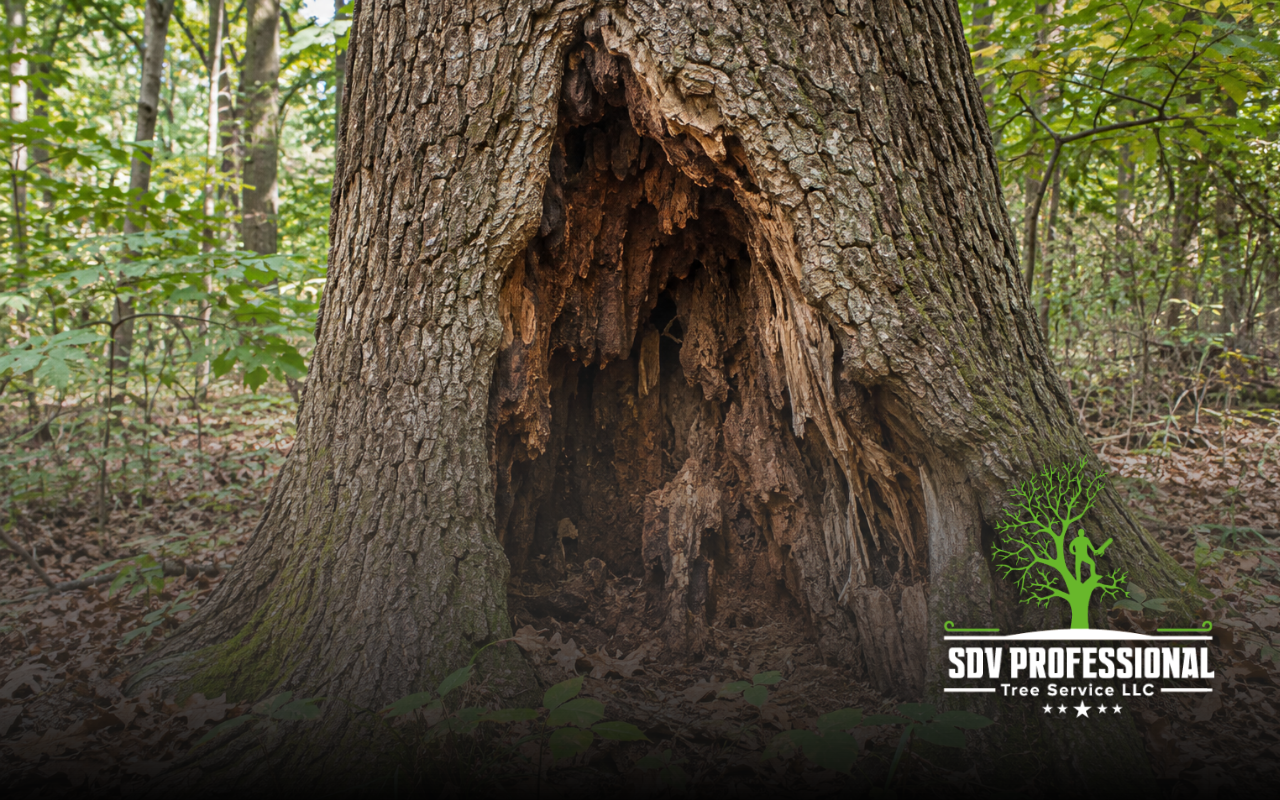
A hollow tree may still look green and healthy, but hidden decay can weaken its trunk. Understanding hollow tree trunk safety in Alabama helps you notice warning signs, protect areas people use, and decide when professional advice matters.
At SDV Professional Tree Service LLC, we know a cavity alone does not always mean removal is necessary.
Visible Warning Signs That May Reveal Hidden Decay
Start with a visual check from the ground. Look for changes in bark, openings, and growth around the trunk. Common signs include:
- Open cavities, large cracks, or missing bark.
- Shelf mushrooms growing on the trunk or near roots.
- Soft, crumbling wood or unusual debris near the base.
- Large dead branches or a newly changing lean.
Several signs together may call for closer attention. Our guide to signs a tree may need removal offers related observations.
Regular Inspections Help You Notice Important Tree Changes
For hollow tree trunk safety in Alabama, check trees periodically and after strong storms. Compare cracks, cavities, roots, and branches with earlier photos. A flashlight can help you see an existing opening, but it cannot show how much sound wood remains inside.
If you are learning how to check if a tree is hollow, avoid digging into cavities, drilling holes, or pushing the trunk. These actions may cause damage or injury. An arborist can assess hidden concerns.
Why Nearby Homes And Walkways Change The Risks
The location of a hollow tree matters as much as its appearance. A weakened trunk near a roof, driveway, play area, or walkway can expose people and property to falling wood. Wind can add stress. For hollow tree trunk safety in Alabama, give extra attention to trees beside occupied spaces. Healthy-looking trees can still have decay.
Keep people away from a tree with fresh splits, hanging limbs, or obvious movement at its roots. Stay away from damaged canopies and utility lines.
Simple Observations That Support A Safer Tree Assessment
Record details without touching unstable wood. Photos help you compare changes and explain concerns. Focus on what you can see safely:
- Take photos of openings and cracks from several angles.
- Note whether the trunk lean or branch position has changed.
- Look for lifted soil or damaged roots without digging.
- Record when new damage appeared, especially after storms.
A hollow sound alone cannot establish safety. Enough healthy wood must remain to support the tree. That requires assessment of the trunk, roots, crown, and surroundings.
Choosing Between Tree Support And Complete Safe Removal
Many people ask, can hollow trees remain standing? Yes, some remain stable for years because the outer wood continues to support the tree. However, extensive decay or poor roots may make a tree unsafe.
At SDV Professional Tree Service LLC, we discuss options based on the tree’s condition. In suitable cases, tree cabling and bracing may help weak limbs or unions, but it cannot replace missing trunk strength. Assessment should guide the choice.
Important Precautions Before Removing A Damaged Hollow Tree
Hazardous tree removal in Alabama calls for care, especially near buildings, cars, and power lines. A hollow trunk may respond unpredictably to cutting. Do not attempt to push, climb, or fell a suspicious tree yourself. Crews must consider nearby hazards. For hollow tree trunk safety in Alabama, never treat a hollow trunk like solid wood during cutting. Sections may shift unexpectedly.
- Keep children, visitors, and pets outside the work area.
- Move movable items away only when it is safe.
- Check applicable local rules and property boundaries before removal.
- Ask about suitable ways to reuse or dispose of clean wood.
Our tree removal information explains this service. Check for nesting wildlife before disturbing hollow logs. Where suitable, branches can become mulch, and some logs may remain in low-traffic natural areas as habitat.
Frequently Asked Questions
How can I tell whether a trunk is hollow?
Look for cavities, decayed wood, mushrooms, or major cracks. An arborist can investigate hidden decay and stability.
Can a hollow tree stay standing safely?
Sometimes. Healthy outer wood may support the trunk despite an empty center. Safety depends on wood, roots, branches, and nearby hazards.
Should I fill an opening with cement or foam?
No. Filling does not restore strength and may damage the tree.
Does every hollow tree need to be removed?
No. Monitoring may work, but serious decay near people may call for removal.
What should I do after a strong storm?
Watch for cracks, hanging branches, or lifted roots. Keep away and request an assessment.
Protect Your Property While Respecting Alabama Tree Life
Good hollow tree trunk safety in Alabama starts with noticing changes and avoiding risky do-it-yourself tests. Balance safety with the value of living trees and wildlife. Safe trees may only need monitoring.
If you are concerned about hazardous tree removal in Alabama, our team at SDV Professional Tree Service LLC can discuss your tree removal needs. You can send us details about your tree so we can help you consider the next step.