Fall Storm Tree Inspection Steps to Prevent Property Damage
Fall storms can bring strong wind, heavy rain, and sudden tree damage. A fall storm tree inspection helps you spot weak areas early. At SDV Professional Tree Service LLC, we help homeowners prepare trees so yards, roofs, vehicles, and outdoor spaces face fewer risks.
Knowing how to inspect trees before fall storms gives you time to act. Check branches, trunks, roots, and soil for warning signs. When damage is serious, professional support can reduce danger.
Why Fall Tree Checks Matter Before Storm Season
A fall storm tree inspection can reveal problems that routine yard care may miss. Dead limbs, hidden decay, weak branch joints, or poor root support may become serious hazards when wind and rain arrive.
Our pre-storm tree inspection checklist gives homeowners a practical place to begin. Early action can reduce emergency work and support healthier trees.
- Look for dead or hanging branches.
- Check the trunk for cracks or decay.
- Watch for exposed or lifting roots.
- Note sudden leaning or canopy changes.
Check Branches Leaves And Trunks Carefully For Weakness
Look through the canopy. Healthy branches should appear firmly attached, while broken, dead, or crossing limbs need attention. Sparse leaves or unusual color can point to stress.
Next, inspect the trunk from several angles. Cracks, loose bark, holes, or soft areas may show hidden damage. A fall storm tree inspection should also include large branch joints.
Root And Soil Problems Can Reduce Tree Stability
Roots keep a tree anchored, so changes around the base matter. Soil erosion, standing water, compacted ground, or lifting roots can weaken support. Mushrooms may also suggest decay below the surface.
For broader care, review our tree health management guidance. At SDV Professional Tree Service LLC, we look at the whole tree because branches, soil, and roots work together during severe weather.
- Keep mulch away from direct trunk contact.
- Watch for soil movement near major roots.
- Improve drainage where water collects.
- Avoid cutting large roots without guidance.
Warning Signs That Need Faster Tree Care Today
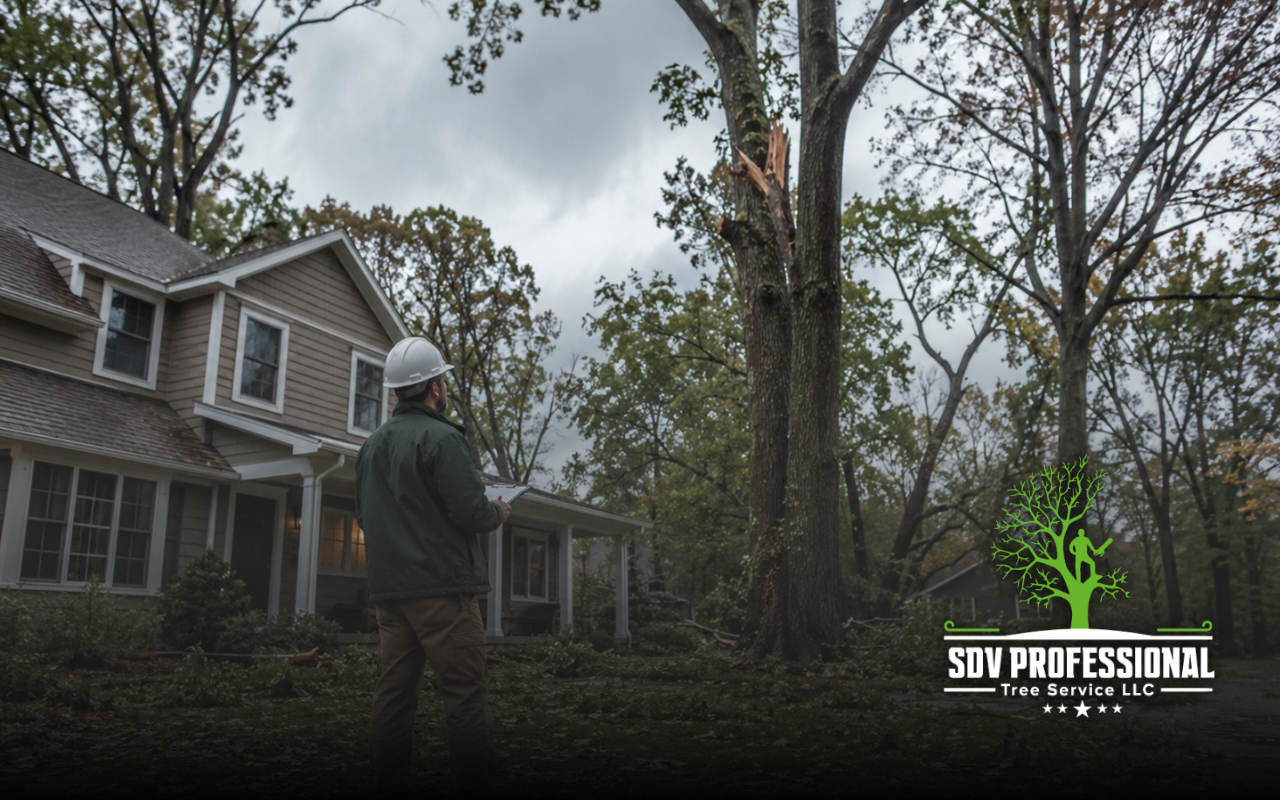
Some signs trees may fall in storms require quick action. A new lean, deep trunk split, large hanging limb, exposed roots, or decay near the base can mean the tree has lost important strength.
If conditions appear urgent, our emergency tree service information explains when professional help may be needed. Avoid standing or parking below a damaged tree when wind is increasing.
Pruning And Support Can Improve Storm Resistance Safely
Careful pruning removes weak growth before storms. Focus first on dead, damaged, or diseased branches. Removing crossing limbs can also help wind move through the canopy.
Large limbs, tall trees, and damaged trunks should be handled by trained professionals. Cabling may help some trees, but it requires proper placement and checks. Our storm damage prevention guidance explains more ways to prepare.
- Remove small dead branches you can reach safely.
- Never climb unstable trees during windy weather.
- Keep tools sharp and in good condition.
- Call professionals for large or risky limbs.
Build A Safer Plan Before Severe Weather Arrives
A simple response plan can reduce stress. Save important phone numbers, move vehicles away from large trees, and choose indoor areas away from windows and overhead hazards.
Knowing how to inspect trees before fall storms is only one part of preparation. If a tree becomes unstable, emergency tree service in Alabama may be necessary. Our after-storm emergency service guide explains useful next steps.
Frequently Asked Questions
When should I inspect trees before fall storms?
Inspect trees before storm season and again after strong wind or heavy rain. A fall storm tree inspection is also useful when you notice new cracks, leaning, broken branches, or changes around the roots.
What are common signs a tree may fall?
Common signs trees may fall in storms include deep cracks, sudden leaning, root lifting, large dead limbs, trunk decay, and soil movement near the base.
Can homeowners safely prune storm damaged branches?
Small reachable branches may be manageable with proper tools. However, avoid large limbs, power lines, unstable trees, or any work that requires climbing.
When should I call for emergency tree help?
Call when a tree threatens a home, road, vehicle, utility line, or occupied area. Emergency tree service in Alabama is important when damage creates an immediate safety risk.
Should trees be checked again after a storm?
Yes. Storms can create cracks, broken limbs, or root movement that were not present before. Check from a safe distance and arrange professional evaluation when damage is unclear.
Protect Your Property With Timely Tree Care Planning
Preparation can reduce surprises. A fall storm tree inspection gives you a clear view of weak branches, root problems, and other hazards. Our tree services in Decatur support property owners who need practical care.
At SDV Professional Tree Service LLC, we focus on safe guidance before and after storms. Use a fall storm tree inspection as part of your seasonal plan. If you see a dangerous tree or need help preparing, reach our tree care team to discuss the safest next step.