How Sunscald on Tree Bark Affects Healthy Trees
Sunscald on tree bark can quietly weaken a healthy tree after sharp temperature changes. Winter sunlight warms the trunk, but cold evening air cools it fast. This sudden shift can injure living tissue under the bark and leave the tree open to more problems.
At SDV Professional Tree Service LLC, we help property owners understand these warning signs early. With simple care, better planting choices, and timely support, many trees can stay strong through Alabama’s changing seasons.
How Sudden Temperature Changes Harm Tree Bark
What causes sunscald on trees often starts with warm daytime sun and freezing nighttime air. The sunny side of the trunk heats quickly, then cools too fast after sunset. As a result, cells under the bark may die and form weak, damaged areas.
Young trees face the greatest risk because their bark is still thin. Recently pruned trees can also become more exposed. Our tree health management guidance explains how steady care can reduce stress before damage begins.
Early Signs That Reveal Hidden Bark Injury
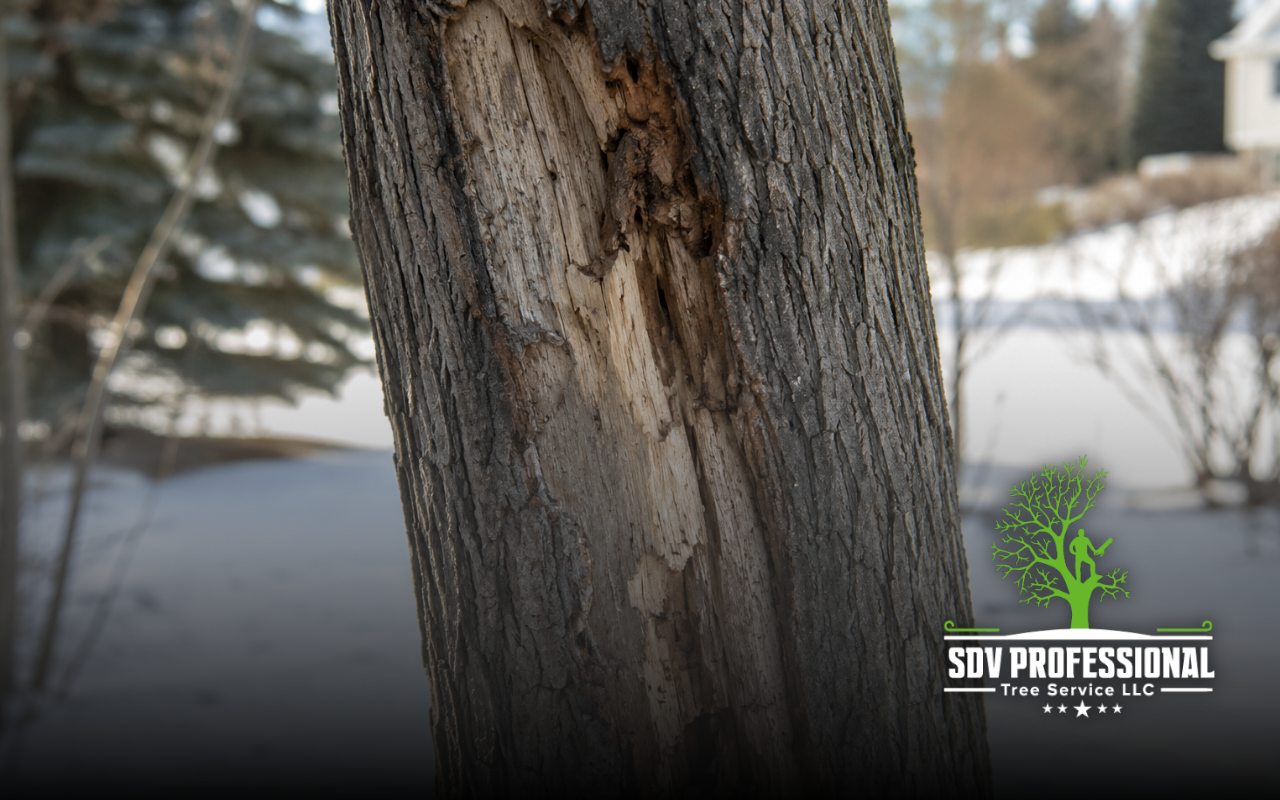
Knowing how to identify bark damage makes early action much easier. Look for pale, flat, or sunken spots on the south or southwest side of the trunk. Later, the bark may darken, crack, peel, or separate from the wood below.
- Discolored patches that feel dry or brittle
- Long cracks that appear after cold weather
- Loose bark near a damaged trunk section
- Weak growth above the injured area
These signs can resemble disease or frost damage. Therefore, our tree disease identification guide can help you compare symptoms more clearly.
Why Young Trees Need Extra Seasonal Protection
Young maples, fruit trees, birches, and other thin-barked species are more likely to develop sunscald on tree bark. Their trunks absorb heat quickly, while older trees have thicker bark that gives better natural protection.
Open yards, reflected heat from pavement, and dry soil can increase the risk. At SDV Professional Tree Service LLC, we often recommend checking new trees after sudden freezes, especially when warm afternoons follow very cold nights.
Simple Winter Steps That Protect Tree Trunks
Winter care can lower stress and keep trunk temperatures more stable. Preventing sunscald on tree bark begins with steady protection before harsh weather arrives. Start before the first hard freeze, then check protection during the season to make sure it stays secure and dry.
- Use light-colored tree wrap around the lower trunk
- Remove wraps in spring to prevent trapped moisture
- Add mulch without piling it against the bark
- Water during dry periods when the ground is not frozen
For more seasonal advice, visit our practical tree health tips before cold weather arrives.
Summer Care That Builds Stronger Bark Resilience
Sunscald on tree bark is often linked to winter, yet summer care still matters. Drought, heat, and poor soil can weaken a tree before cold weather begins. Consistent watering helps the tree manage stress and support healthy tissue growth.
Temporary shade may protect newly planted trees from intense afternoon sun. Also, avoid heavy late-season pruning because it can suddenly expose bark that was previously shaded by branches.
Best Tree Choices For Alabama Weather Conditions
Choosing the right species can reduce future bark problems. In exposed spaces, sunscald on tree bark is less likely when trees suit the local climate. Native trees often handle local heat, storms, and temperature swings better than species from very different climates.
- Choose species with thicker or lighter-colored bark
- Match the tree to the site’s sun exposure
- Leave enough room for healthy root growth
- Ask about local soil and drainage needs
Our Decatur tree service options can support planning, planting, and long-term care for your property.
Frequently Asked Questions
Can sunscald kill a healthy tree?
Severe damage can weaken large trunk areas, slow growth, and allow decay. However, early care may help the tree recover and protect the remaining healthy tissue.
Which side of the trunk is affected?
The south or southwest side is often damaged because it receives strong winter sun before temperatures fall quickly at night.
Should damaged bark be cut away?
Do not remove large bark sections without guidance. Poor cuts may enlarge the wound and increase the chance of infection.
Can tree wrap stay on all year?
Usually, wraps should come off in spring. Leaving them too long may trap moisture, hide pests, or restrict normal trunk growth.
When should I call a professional?
Call when cracks spread, bark falls away, branches decline, or the damage is hard to identify. A tree health service in Alabama can check safety and recovery needs.
Professional Care Supports Safer Long-Term Recovery
Sunscald on tree bark can heal slowly, so regular checks are important. Watch for new tissue forming around the wound, but also note any soft wood, insects, fungus, or growing cracks. Our disease and pest warning guide can help with ongoing checks.
With SDV Professional Tree Service LLC, you receive clear guidance based on the tree’s condition and location. Get in touch with our team through the tree health support page when you need help protecting your landscape.