
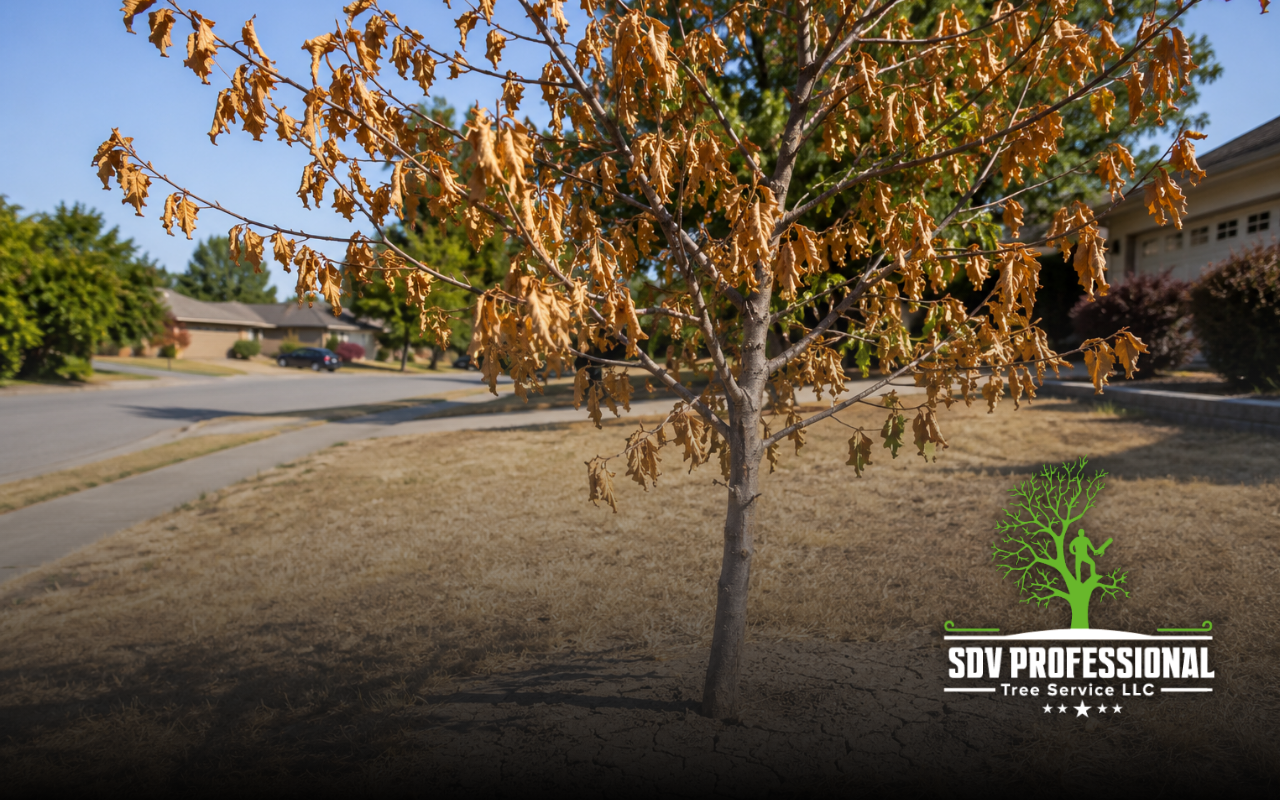
Protect Drought-Stressed Trees With Simple Recovery Steps
Drought-stressed trees can lose color, drop leaves, and stop growing during long dry periods. However, early care can protect roots and reduce lasting damage. At SDV Professional Tree Service LLC, our team guides Alabama property owners with simple steps that support safer, healthier landscapes.
Many drought-stressed trees can recover when water, soil, and care are managed well. Therefore, knowing how to tell if a tree is drought-stressed gives you time to act before weak branches, pests, or disease create bigger problems.
Early Warning Signs Reveal Hidden Tree Stress
Wilting leaves, brown edges, yellow color, and early leaf drop are common signs. You may also notice thin foliage, short new growth, cracked bark, or brittle branches. In drought-stressed trees, these changes show that roots may not be getting enough moisture.
- Leaves look dry, curled, or limp.
- Branches grow slowly or break easily.
- Soil feels hard several inches below ground.
Because symptoms can look like pest or disease damage, compare several signs before taking action. Our guide to brown tree leaves and common causes can help you understand what your tree may be facing.
Fast Action Supports Stronger Tree Recovery Results
Early action matters because dry roots cannot move water and nutrients well. As drought-stressed trees weaken, the tree makes less energy and becomes more open to insects or disease. At SDV Professional Tree Service LLC, we focus on care that protects the root zone first.
Many homeowners ask, can trees recover from drought stress? In many cases, yes. Recovery depends on the tree species, age, damage level, and future care. Consistent support can improve the chance of healthy new growth.
Soil Moisture Checks Guide Better Watering Decisions
Check the soil before watering. Push a screwdriver or soil probe several inches into the ground near the outer canopy. If the tool does not enter easily, the soil may be too dry or compacted.
Test more than one area because shade, slope, and nearby plants can change moisture levels. For broader support, review our tree health management approach and learn how soil conditions affect the whole tree.
Deep Watering Builds Healthier and Stronger Roots
Water slowly and deeply so moisture reaches the main root zone. Light watering only wets the surface and may lead to shallow roots. Instead, use a soaker hose or drip line to reduce runoff and help water soak into the soil.
- Water early in the morning.
- Move the hose around the canopy edge.
- Let the soil absorb water slowly.
Avoid watering directly against the trunk. Also, check local rules during dry periods. These habits give drought-stressed trees steady support without flooding the roots.
Mulch Protects Soil and Reduces Moisture Loss
Organic mulch helps soil stay cooler and hold water longer. Spread a two-to-four-inch layer around the tree, but keep it several inches away from the trunk. Wood chips, bark, and compost can also improve soil over time.
Good mulching helps drought-stressed trees by reducing weed growth and protecting roots from heat. For more simple care ideas, visit our practical tree health tips. Small changes can make a difference during Alabama’s dry weather.
Smart Pruning and Nutrition Reduce Added Stress
Prune only dead, broken, or unsafe branches during drought. Heavy pruning removes too many leaves, which limits the tree’s ability to make energy. Clean tools and careful cuts also lower the risk of infection.
- Remove only damaged or dead wood.
- Avoid strong fertilizer during severe stress.
- Use compost only when soil needs support.
Before adding fertilizer, consider a soil test. Too much fertilizer can harm dry roots. Our team at SDV Professional Tree Service LLC can also check for hidden concerns through a professional tree health service in Alabama.
Frequently Asked Questions
How often should dry trees receive deep watering?
Most trees need slow watering based on soil type, weather, and size. Check the soil first, then water when the root zone feels dry several inches down.
Can brown leaves turn green again later?
Brown tissue usually will not turn green. However, healthy new leaves may grow after the tree receives enough moisture and proper care.
Should I fertilize a tree during drought?
Usually, strong fertilizer should wait until moisture improves. Dry roots can be damaged by extra salts, so test the soil before applying nutrients.
When should I call a tree professional?
Call when branches become brittle, bark cracks, pests appear, or the tree keeps declining. A professional can check safety, roots, and possible disease.
How can pests affect drought-weakened trees?
Weak trees have fewer natural defenses. Inspect bark and leaves often, and use our guide on tree disease and pest warning signs.
Long-Term Care Keeps Alabama Landscapes More Resilient
Recovery takes time, so track leaf color, new growth, and branch condition each week. Keep the area clean, maintain mulch, and adjust watering as weather changes. These steps help drought-stressed trees regain strength and face future dry periods.
With SDV Professional Tree Service LLC, you receive clear guidance for healthier trees and safer property care. Visit our tree care consultation page to discuss ongoing stress, weak branches, or concerns about your landscape.