Spotting Tree Fungus On Bark In Alabama Yards
Tree fungus on bark in Alabama can appear as strange patches, spots, or soft areas on oaks, maples, and other yard trees. Because our warm and humid weather supports fungal growth, early attention can protect both beauty and safety.
At SDV Professional Tree Service LLC, we help homeowners notice small bark changes before they become bigger problems. This guide explains common fungi, warning signs, causes, prevention steps, and when professional care may be the safest choice.
Common Fungal Growths Found On Alabama Tree Bark
Alabama’s damp weather can support many fungal problems. Some affect leaves first, while others grow on bark, roots, or inside the trunk. Knowing the most common types helps you act sooner and ask better questions during a tree visit.
- Honey fungus can attack roots and slowly weaken the whole tree.
- Powdery mildew may cover young leaves with a pale coating.
- Sooty mold often appears when insects leave sticky residue behind.
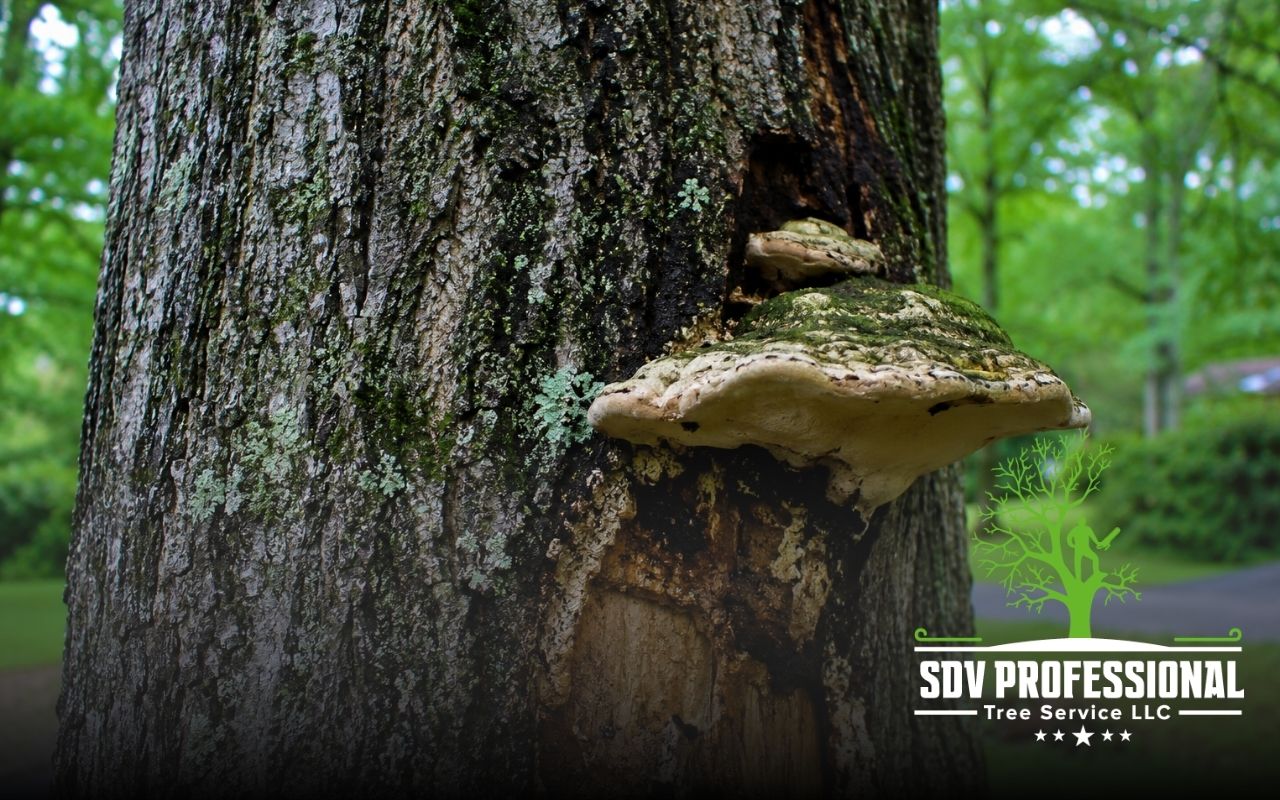
- Bracket fungi may show deep decay inside trunks or large limbs.
For a closer look at different growth patterns, review our guide to common tree fungus types. It can help you compare what you see before calling for an inspection.
Early Warning Signs Your Tree Bark Needs Care
Tree fungus on bark may start with small color changes. White, gray, green, orange, or black patches can all point to stress. Peeling bark, cracks, soft spots, and small mushroom-like growths may also show decay or infection.
- Bark that feels soft, wet, or spongy.
- Deep cracks or peeling sections near the trunk.
- Dead branches, thin leaves, or early leaf drop.
- Small round spots, shelves, or raised patches on bark.
These signs of unhealthy tree bark should not be ignored. For more warning clues, visit our page on spotting tree diseases and pests.
Main Reasons Fungus Starts Growing On Local Trees
Many homeowners ask what causes fungus on trees after noticing bark damage. The most common reasons include too much moisture, poor drainage, weak roots, storm damage, compact soil, and open wounds from lawn tools.
Nearby infected leaves or branches can also spread spores by wind, rain, or dirty tools. With SDV Professional Tree Service LLC, you can get clear guidance on safer care steps and a closer look at the tree’s condition.
How Fungal Problems Can Weaken Your Trees
Tree fungus on bark in Alabama can block normal movement of water and nutrients. As a result, limbs may weaken, leaves may thin, and growth may slow. In severe cases, decay can spread inside the trunk.
When fungus reaches roots or large limbs, the tree may become unsafe near homes, driveways, or play areas. Our page on tree disease identification and treatment explains why quick action can protect your yard.
Simple Care Habits That Lower Fungal Risk
Good care can reduce many fungal risks before they spread. However, prevention works best when it is steady. Small seasonal steps can support stronger bark, better airflow, and healthier roots throughout the year.
- Water deeply, but avoid keeping soil constantly wet.
- Prune dead or damaged branches during the right season.
- Keep mulch away from direct contact with the trunk.
- Clean tools before moving from one tree to another.
For more simple care ideas, read our tree health tips. These habits can help your trees handle heat, storms, and disease pressure with less stress.
When Professional Tree Help Becomes The Safer Choice
Tree fungus on bark in Alabama may need expert care when bark is soft, limbs are dying, or mushrooms grow from the trunk. These signs can point to deeper decay that is hard to judge from the ground.
Our team at SDV Professional Tree Service LLC can inspect the tree, explain what we see, and recommend practical next steps. For local support, learn more about our tree services in Decatur AL.
Frequently Asked Questions
What causes fungus on trees in humid yards?
Moisture, weak bark, poor airflow, and tree stress are common causes. Spores can also spread from infected debris, nearby plants, rain splash, or dirty cutting tools.
Can tree fungus on bark in Alabama spread?
Yes, some fungi can spread to nearby trees through roots, spores, tools, or infected plant waste. Early cleanup and proper care can lower that risk.
Are all fungal growths dangerous to trees?
No, not all growths cause serious damage. Still, some can signal hidden decay, insect activity, or stress. A careful inspection can help separate mild issues from urgent ones.
Should I remove mushrooms from tree bark myself?
You can remove loose growths, but that may not solve the deeper issue. Mushrooms can be signs of internal decay, so the tree should be checked if they return.
When should I contact a tree care team?
Contact a professional when you see soft bark, dead limbs, leaning, spreading decay, or repeated fungal growth. When customers contact SDV Professional Tree Service LLC, we explain clear options before work begins.
Healthy Bark Supports Strong Trees For Many Years
Tree fungus on bark in Alabama is easier to manage when you act early. Regular checks, clean pruning, smart watering, and healthy soil can protect your trees from long-term stress.
Because some fungal signs point to hidden damage, professional guidance can bring peace of mind. To ask about tree care services in Alabama, visit our contact page and tell us what you are seeing.